
Vitiligo
Introduction to Skin Biopsy
- A detailed history and local examination is performed by the Skin Specialist at Auro Skin Clinic.
- Diagnosis is made by the combination of clinical history and clinical examination
- Treatment includes a combination of medical, UV therapy, surgical treatment and tattooing.
- Eximal Mini light treatment is considered a great treatment option due to its excellent efficacy, short treatment course and less adverse reactions.
What is Vitiligo?
- Vitiligo is a skin condition in which the pigment-producing cells of the skin, called ‘melanocytes’ are destroyed. Melanocytes produce ‘melanin’ that imparts brown color to skin, so loss of these cells leads to loss of the color causing white patches.
- The varicella-zoster virus is the same virus that causes chickenpox. Once you have had chickenpox, varicella-zoster virus remains in your body’s nerve tissues and never really goes away. It can be reactivated later in life causing Herpes zoster.
How can one get vitiligo?
- The exact cause of vitiligo is not known. Vitiligo is an autoimmune disease with underlying genetic predisposition
- There are three theories on the causation:-
- Malfunction of the nerves may cause deranged nerve supply and subsequent damage to melanocytes.
- Sometimes, the body destroys its own tissue perceiving it as being foreign. This is known as an autoimmune reaction, which may also be the cause of melanocyte damage
- Some researchers believe that melanocytes can self-destruct and certain triggers e.g. trauma may trigger this self-destruction.
Is vitiligo hereditary?
- No. Vitiligo is not transmissible to family members or contacts.
Is vitiligo transmissible to family members or contacts?
- No. Vitiligo is not transmissible to family members or contacts.
How does vitiligo look?
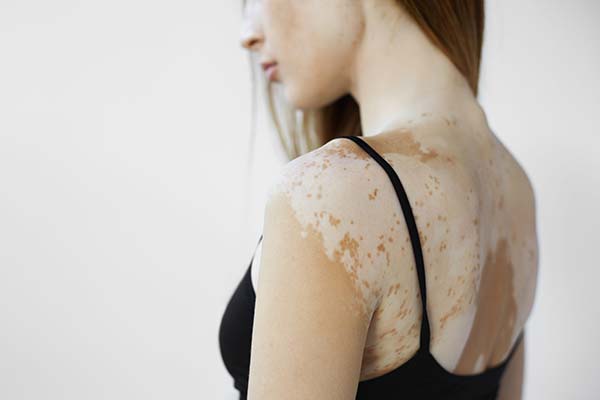
- Vitiligo presents as asymptomatic white or off-white patches on the skin. The hair overlying the area may also lose color and become white. Other than the loss of color, skin affected by vitiligo appears completely normal.
Which areas of the body are affected by vitiligo?
Are there any tests to confirm vitiligo?
- Vitiligo can usually be diagnosed based on clinical appearance and bed-side tests such as Wood’s lamp examination
- Rarely a small piece of skin may be examined (skin biopsy) to differentiate vitiligo from other white spots on skin
- Amongst the patients having vitiligo, 15% may also have other autoimmune diseases such as thyroid disease, rheumatoid disease, diabetes, pernicious anemia etc. Blood tests may be needed to confirm the absence of these diseases
How can vitiligo be treated?
- The goals of treatment are to control the spread of disease and to regenerate pigmentation in the areas that have lost the same. Treatment choice is based on number, site and extent of involvement and patient convenience. Also supportive camouflage treatment helps to reduce social problems while the patient is on corrective therapy.
- Various treatment options
- Medical treatment
- Medical treatment includes oral medications and topical creams which may achieve the objective of stopping the spread of disease and regaining pigmentation in most areas.
- UV Therapy
- Ultraviolet light therapy includes exposing the affected area to ultraviolet A (UVA) or Ultraviolet B (UVB) therapy. UVA therapy is usually given along with a drug called psoralen. The drug is used orally or can be applied topically and the affected area is then exposed to UVA light. Narrow Band UVB light (NB-UVB) is usually given by making the patient stand in a light box or by exposing a localized area to a focussed beam of NB-UVB light. Multiple sessions of UV light therapy are required at a frequency of two-three sessions per week.
- Surgical Therapy
- Surgical treatments include taking skin grafts from a person’s own body and transplanting the entire skin or the melanocytes (color producing cells) in the affected area. This is usually done when the disease is stable i.e. not increasing in size or number. Various surgical grafting modalities are punch grafting, blister grafting, smash grafting and melanocyte transfer surgery.
- Tattooing
- Tattooing of the vitiliginous skin and cosmetic camouflage can help to cover the white patches.
- Skin protection
- Protecting the vitiliginous skin against sun exposure is important and can be achieved by using sunscreens and wearing full sleeved clothes.
- Counseling
- Understanding the innocuous and cosmetic nature of disease can help to prevent psychological distress. It is also important to understand the limitations of therapy in providing a complete regimentation. Working with, and supporting the doctor through the prolonged therapeutic course gives better results.
- Medical treatment